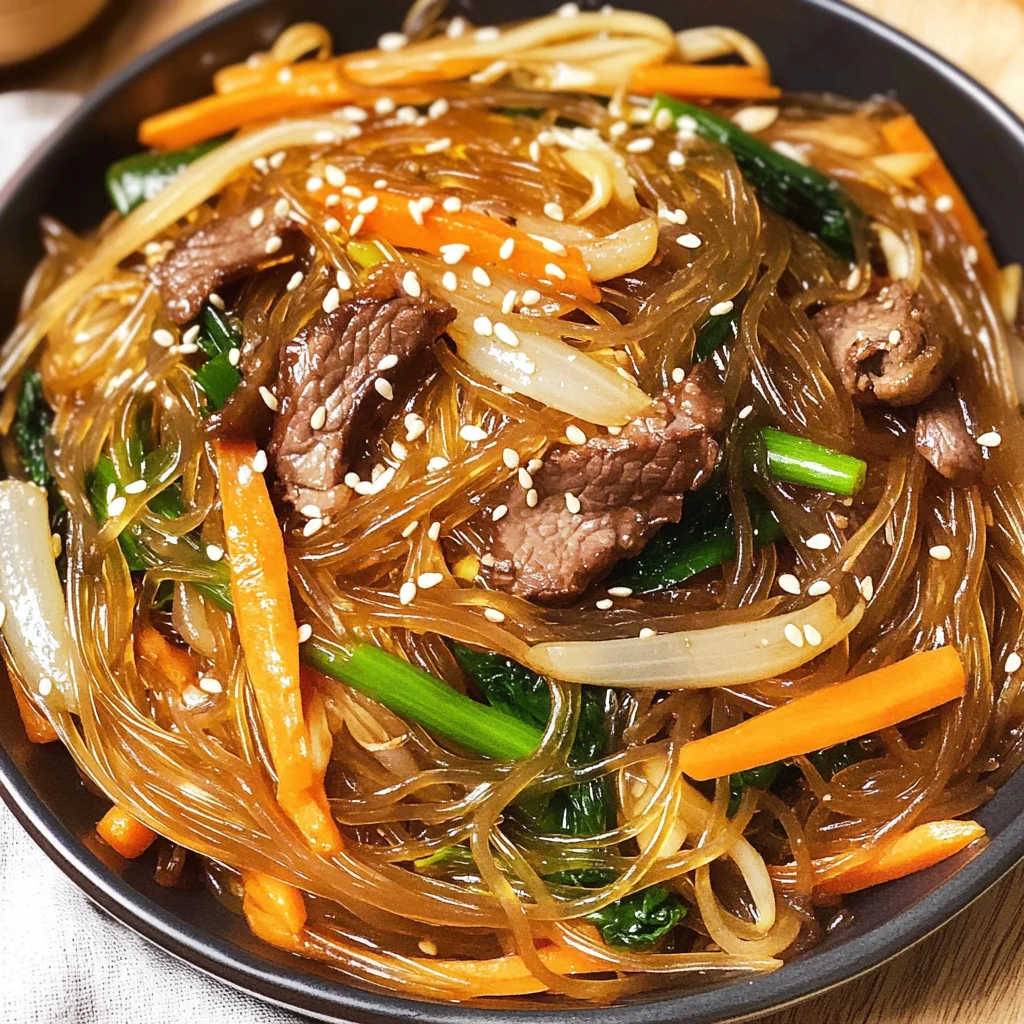
Japchae (Korean Glass Noodle Stir Fry) is a delightful dish that showcases the unique texture of sweet potato glass noodles. This vibrant meal is perfect for various occasions, whether it’s a festive celebration or a cozy family dinner. Packed with colorful vegetables and protein, Japchae is not only delicious but also visually appealing, making it a favorite for many.
Jump to:
- Why You’ll Love This Recipe
- Tools and Preparation
- Essential Tools and Equipment
- Importance of Each Tool
- Ingredients
- For the Noodles and Protein
- For the Vegetables
- For Cooking
- For the Sauce
- How to Make Japchae (Korean Glass Noodle Stir Fry)
- Step 1: Make the Japchae Sauce
- Step 2: Cook the Japchae Noodles
- Step 3: Make the Egg Crepe
- Step 4: Cook the Beef
- Step 5: Sauté the Vegetables
- Step 6: Assemble the Japchae
- Step 7: Serve
- How to Serve Japchae (Korean Glass Noodle Stir Fry)
- As a Main Dish
- As a Side Dish
- Room Temperature Serving
- How to Perfect Japchae (Korean Glass Noodle Stir Fry)
- Best Side Dishes for Japchae (Korean Glass Noodle Stir Fry)
- Common Mistakes to Avoid
- Storage & Reheating Instructions
- Refrigerator Storage
- Freezing Japchae (Korean Glass Noodle Stir Fry)
- Reheating Japchae (Korean Glass Noodle Stir Fry)
- Frequently Asked Questions
- What is Japchae (Korean Glass Noodle Stir Fry)?
- Can I make Japchae vegetarian?
- How do I customize my Japchae?
- Is Japchae suitable for meal prep?
- Final Thoughts
- 📖 Recipe Card
Why You’ll Love This Recipe
- Easy to Prepare: With straightforward steps and readily available ingredients, this recipe is accessible for cooks of all skill levels.
- Flavorful Dish: The combination of sweet soy sauce and sesame oil adds depth and richness to every bite.
- Versatile Meal: Serve it as a main course or as a side dish alongside your favorite proteins for a complete meal.
- Healthy Ingredients: Loaded with fresh vegetables and lean protein, Japchae is both nutritious and satisfying.
- Customizable Recipe: Feel free to adjust the veggies or add different proteins based on your preference.
Tools and Preparation
Before you start cooking, gather the necessary tools to make the process smooth and enjoyable.
Essential Tools and Equipment
- Large pot
- Nonstick pan
- Mixing bowl
- Kitchen shears (optional)
- Spatula
Importance of Each Tool
- Large pot: Essential for boiling the sweet potato noodles evenly without sticking together.
- Nonstick pan: Helps prevent ingredients from sticking, making cooking and cleanup easier.
- Mixing bowl: Useful for combining sauce ingredients or tossing everything together before serving.
Ingredients
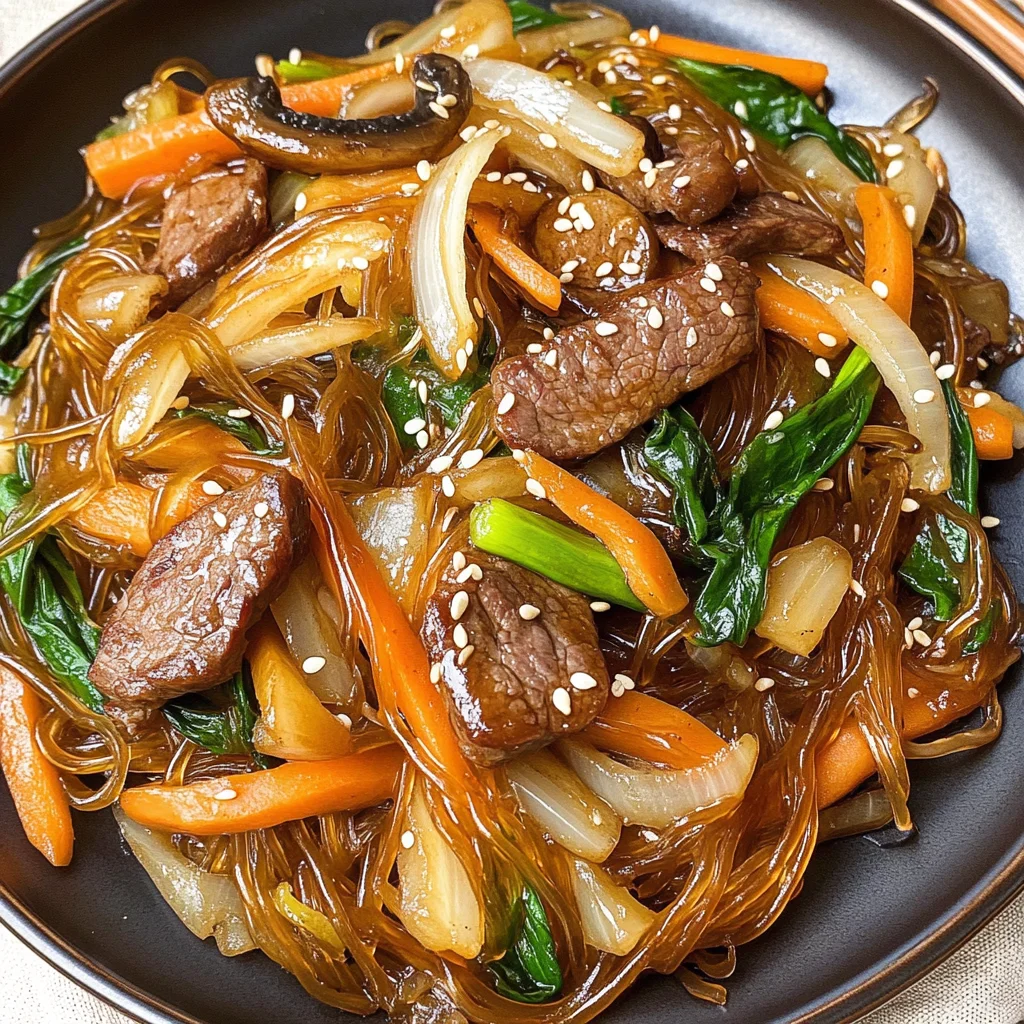
To prepare this delicious Japchae (Korean Glass Noodle Stir Fry), you will need the following ingredients:
For the Noodles and Protein
- 12 ounces sweet potato glass noodles
- 16 ounces beef (cut into strips)
For the Vegetables
- 2 large eggs (beaten)
- 1 large carrot (peeled and julienned)
- 1 medium yellow onion (thinly sliced)
- 3 mushrooms (thinly sliced)
- 2 cups baby spinach (packed)
- 2 stalks green onion (cut into 1 inch pieces)
For Cooking
- Oil (for cooking)
- Salt and black pepper (as needed)
For the Sauce
- 7 tablespoons soy sauce (light sodium)
- 3 tablespoons honey (or more brown sugar)
- 2 tablespoons brown sugar (light or dark)
- 2 tablespoons toasted sesame oil
How to Make Japchae (Korean Glass Noodle Stir Fry)
Step 1: Make the Japchae Sauce
Mix together all the ingredients for the sauce in a bowl and set aside.
Step 2: Cook the Japchae Noodles
In a large pot of boiling water, add the sweet potato glass noodles. Boil until cooked through, about 10-15 minutes depending on brand. Stir occasionally to prevent sticking. Once done, drain immediately and rinse with cold water until completely cooled. Drain well again.
Step 3: Make the Egg Crepe
In a nonstick pan over medium heat, add a small amount of oil. Pour in the beaten eggs when hot, tilting to spread them into a thin layer. Cook until set, then flip briefly. Remove from heat and let cool before cutting into thin strips.
Step 4: Cook the Beef
In the same pan over medium-high heat, add a little oil. When hot, add beef strips seasoned with salt and pepper. Sear until golden brown, about 4-5 minutes. Remove from pan.
Step 5: Sauté the Vegetables
Using the same pan on medium heat, add more oil if needed. Sauté each vegetable according to their heartiness:
1. Add carrots first; sauté for 15-30 seconds.
2. Next, add onions and green onion bottoms.
3. Follow with mushrooms, then spinach last.
Season lightly with salt and pepper between additions.
Step 6: Assemble the Japchae
Add prepared sauce to the same large pan over medium heat. Stir until sugar dissolves and sauce bubbles slightly; turn down heat. Mix in japchae noodles until evenly coated, then fold in vegetables, beef, and egg strips until combined.
Step 7: Serve
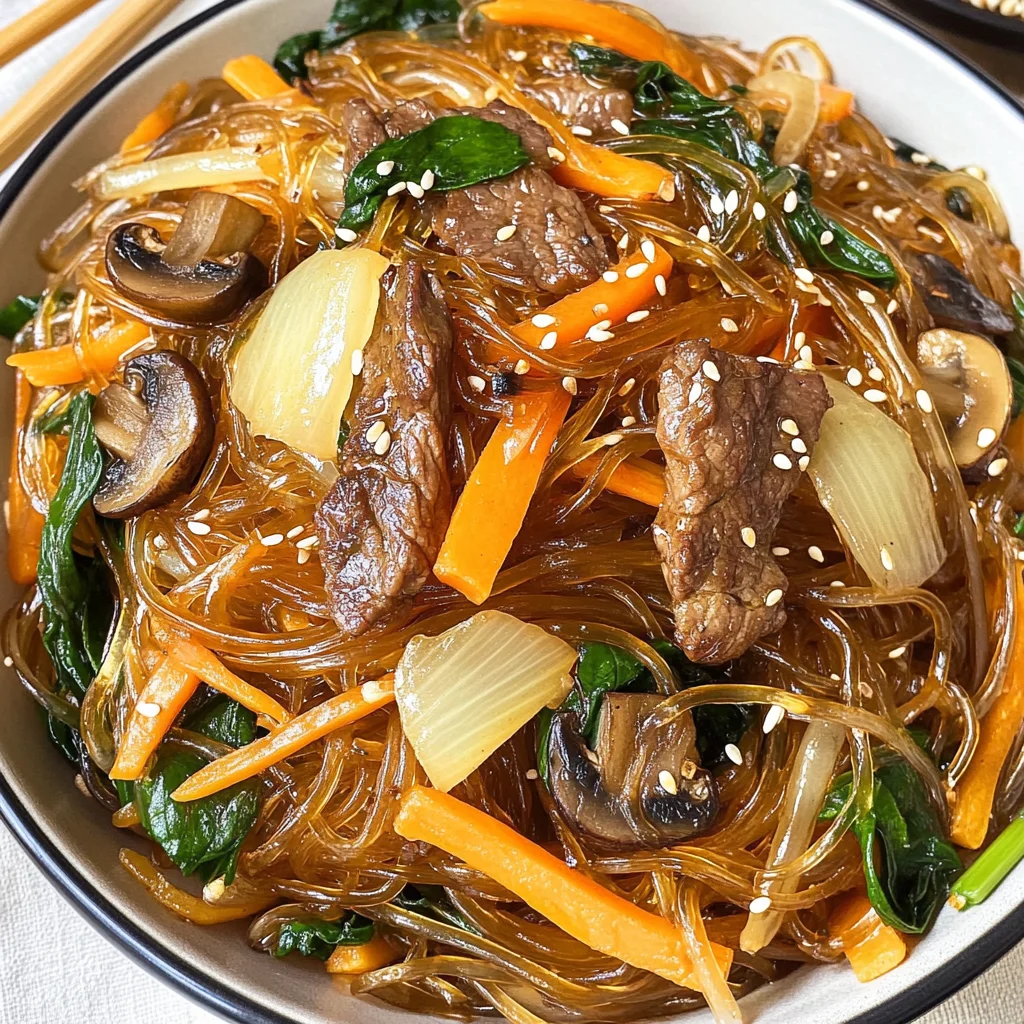
Portion out your japchae or serve family-style garnished with sesame seeds as desired. Enjoy hot, warm, at room temperature, or slightly chilled!
How to Serve Japchae (Korean Glass Noodle Stir Fry)
Japchae is a versatile dish that can be enjoyed in various ways. Whether you’re serving it as a main course or a side, it’s sure to impress your guests and family. Here are some creative serving suggestions for your Japchae.
As a Main Dish
- Serve it hot: Enjoy Japchae freshly cooked for the best texture and flavor.
- Pair with rice: Serve alongside steamed white or brown rice for a wholesome meal.
As a Side Dish
- With Korean BBQ: Complement your grilled meats with a side of Japchae for added flavor.
- At potlucks: Bring Japchae to gatherings; it’s always a crowd-pleaser.
Room Temperature Serving
- For picnics: Pack Japchae in a container, as it tastes great even at room temperature.
- In lunchboxes: Use it as a filling and nutritious option for work or school lunches.
How to Perfect Japchae (Korean Glass Noodle Stir Fry)
Perfecting your Japchae involves careful preparation and cooking techniques. Follow these tips to elevate your dish.
- Choose the right noodles: Opt for sweet potato glass noodles for the best texture and taste.
- Don’t overcook the vegetables: Sauté them just until tender to maintain their crunch.
- Use fresh ingredients: Fresh veggies enhance flavor and nutrition, making your dish vibrant and appealing.
- Balance the sauce: Adjust soy sauce and sweetness to suit your taste; balance is key!
- Serve immediately: For optimal taste, serve Japchae right after cooking while it’s still warm.
Best Side Dishes for Japchae (Korean Glass Noodle Stir Fry)
Pairing side dishes with your Japchae can create a delightful meal experience. Here are some excellent options that complement its flavors.
- Kimchi: This fermented vegetable dish adds tangy heat that pairs beautifully with sweet noodles.
- Korean Spicy Cucumber Salad: A refreshing salad that provides crunch and spice, perfect to balance the flavors of Japchae.
- Steamed Broccoli: Simple and nutritious, steamed broccoli adds color and health benefits to your meal.
- Korean Potato Pancakes (Gamja Jeon): Crispy pancakes made from grated potatoes add a deliciously rich texture.
- Sesame Spinach Salad: A light salad featuring blanched spinach dressed in sesame oil, enhancing the Asian theme.
- Stuffed Peppers: Bell peppers filled with rice or quinoa provide an extra layer of flavor alongside the noodle dish.
Common Mistakes to Avoid
When making Japchae, it’s important to avoid common pitfalls that can affect the dish’s flavor and texture. Here are some mistakes to watch out for:
- Skipping the soaking step: Not soaking the sweet potato noodles can lead to a chewy texture. Always soak them in hot water for at least 30 minutes before cooking.
- Overcooking the vegetables: Overcooked veggies lose their crunch and flavor. Sauté them until just tender to maintain their taste and texture.
- Ignoring sauce balance: Using too much soy sauce or sugar can overpower the dish. Adjust your sauce ingredients to achieve a balanced flavor.
- Not cutting ingredients uniformly: Unevenly cut vegetables can cook at different rates, leading to inconsistent texture. Julienning or slicing uniformly ensures even cooking.
- Rushing assembly: Tossing everything together too quickly can lead to clumping. Take your time mixing the noodles, vegetables, and meat for a well-combined dish.
Storage & Reheating Instructions
Refrigerator Storage
- Store leftover japchae in an airtight container.
- It will last for up to 3 days in the fridge.
Freezing Japchae (Korean Glass Noodle Stir Fry)
- To freeze, place cooled japchae in a freezer-safe container.
- It can be frozen for up to 2 months.
Reheating Japchae (Korean Glass Noodle Stir Fry)
- Oven: Preheat the oven to 350°F (175°C). Spread japchae on a baking sheet and cover with foil. Heat for about 15-20 minutes until warmed through.
- Microwave: Place a portion in a microwave-safe bowl, cover it loosely, and heat for 1-2 minutes. Stir halfway through for even heating.
- Stovetop: In a skillet, add a little oil or water and heat over medium heat, stirring occasionally until warmed through.
Frequently Asked Questions
Here are some common questions about making Japchae:
What is Japchae (Korean Glass Noodle Stir Fry)?
Japchae is a traditional Korean dish made from sweet potato glass noodles stir-fried with vegetables and often meat. It’s known for its unique texture and rich flavors.
Can I make Japchae vegetarian?
Absolutely! You can easily omit the meat and add more vegetables or tofu for protein while keeping all other ingredients the same.
How do I customize my Japchae?
Feel free to add your favorite vegetables such as bell peppers or zucchini. You can also adjust the seasoning according to your taste preferences.
Is Japchae suitable for meal prep?
Yes! Japchae stores well in the refrigerator and is perfect for meal prep as it tastes great when reheated or enjoyed cold.
Final Thoughts
Japchae (Korean Glass Noodle Stir Fry) is not only delicious but also versatile, making it perfect for any occasion. You can customize it with various proteins and vegetables based on your preference. Give this easy recipe a try, and enjoy this delightful dish!
Did You Enjoy Making This Recipe? Please rate this recipe with ⭐⭐⭐⭐⭐ or leave a comment.
📖 Recipe Card
Print
Japchae (Korean Glass Noodle Stir Fry)
- Total Time: 50 minutes
- Yield: Serves approximately 4 people 1x
Description
Japchae, a beloved Korean glass noodle stir fry, is a delightful blend of sweet potato noodles, vibrant vegetables, and tender beef. This dish captures the essence of Korean cuisine with its rich flavors and beautiful presentation. Perfect for any occasion, from festive gatherings to cozy family dinners, Japchae is not only visually appealing but also nutritious and satisfying. The combination of sweet soy sauce and toasted sesame oil infuses each bite with depth.
Ingredients
- 12 ounces sweet potato glass noodles
- 16 ounces beef (cut into strips)
- 2 large eggs (beaten)
- 1 large carrot (peeled and julienned)
- 1 medium yellow onion (thinly sliced)
- 3 mushrooms (thinly sliced)
- 2 cups baby spinach (packed)
- 2 stalks green onion (cut into 1-inch pieces)
- 7 tablespoons soy sauce (light sodium)
- 3 tablespoons honey (or more brown sugar)
- 2 tablespoons brown sugar (light or dark)
- 2 tablespoons toasted sesame oil
- Oil (for cooking)
- Salt and black pepper (as needed)
Instructions
- In a bowl, mix the sauce ingredients and set aside.
- Boil the sweet potato noodles in a large pot for about 10-15 minutes until tender. Drain and rinse with cold water.
- In a nonstick pan, cook the beaten eggs over medium heat until set; then cut into strips.
- Sear seasoned beef strips in the same pan until golden brown. Remove from heat.
- Sauté carrots first in the same pan, followed by onions, mushrooms, and spinach until tender.
- Combine noodles with sauce in the pan over medium heat, then fold in vegetables, beef, and egg strips until well mixed.
- Serve warm or at room temperature.
- Prep Time: 20 minutes
- Cook Time: 30 minutes
- Category: Main
- Method: Stir Fry
- Cuisine: Korean
Nutrition
- Serving Size: 1 cup (200g)
- Calories: 360
- Sugar: 10g
- Sodium: 800mg
- Fat: 14g
- Saturated Fat: 3g
- Unsaturated Fat: 9g
- Trans Fat: 0g
- Carbohydrates: 45g
- Fiber: 3g
- Protein: 20g
- Cholesterol: 120mg